Updated 1217 GMT (2017 HKT) October 3, 2016
Photos: Ethiopia Oromo deaths
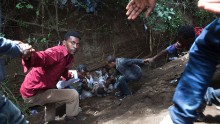
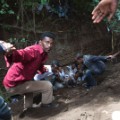
Bystanders work to remove an injured man from a ditch.
Hide Caption
4 of 7
Photos: Ethiopia Oromo deaths
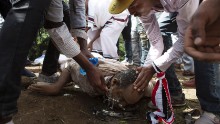
People help a man wash his eyes after police used teargas on festival participants.
Hide Caption
5 of 7
Photos: Ethiopia Oromo deaths
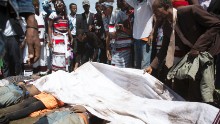
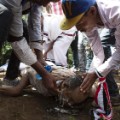
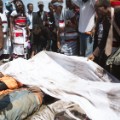
A man covers the bodies of festival goers who were killed in the stampede.
Hide Caption
6 of 7
Photos: Ethiopia Oromo deaths
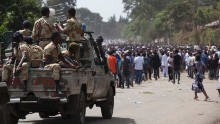
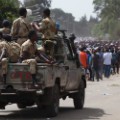
Oromo regional police officers wait in a pickup near a crowd of festival attendees.
Hide Caption
7 of 7
Photos: Ethiopia Oromo deaths
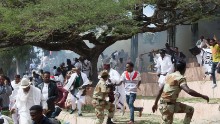
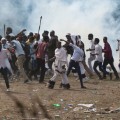
Festival goers flee as police fire teargas into the crowd in Bishoftu, near Addis Ababa, Ethiopia, on Sunday, October 2. At least 52 people died during the stampede that followed. An estimated two million people had gathered at a sacred lake to take part in the Irreecha ceremony to mark the Oromo New Year.
Hide Caption
1 of 7
Photos: Ethiopia Oromo deaths
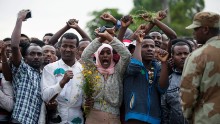
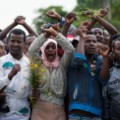
Security forces standby as Oromo people cross their wrists above their heads, a gesture that has become a symbol of Oromo anti-government protests.
Hide Caption
2 of 7
Photos: Ethiopia Oromo deaths
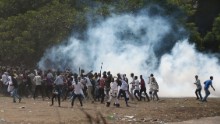
According to AFP photographer Zacharias Abubeker the event quickly degenerated, with protesters throwing stones and bottles and security forces responding with baton charges and tear gas grenades.
Hide Caption
3 of 7
Photos: Ethiopia Oromo deaths
Bystanders work to remove an injured man from a ditch.
Hide Caption
4 of 7
Photos: Ethiopia Oromo deaths
People help a man wash his eyes after police used teargas on festival participants.
Hide Caption
5 of 7
Photos: Ethiopia Oromo deaths
A man covers the bodies of festival goers who were killed in the stampede.
Hide Caption
6 of 7
Photos: Ethiopia Oromo deaths
Oromo regional police officers wait in a pickup near a crowd of festival attendees.
Hide Caption
7 of 7
Photos: Ethiopia Oromo deaths
Festival goers flee as police fire teargas into the crowd in Bishoftu, near Addis Ababa, Ethiopia, on Sunday, October 2. At least 52 people died during the stampede that followed. An estimated two million people had gathered at a sacred lake to take part in the Irreecha ceremony to mark the Oromo New Year.
Hide Caption
1 of 7
Photos: Ethiopia Oromo deaths
Security forces standby as Oromo people cross their wrists above their heads, a gesture that has become a symbol of Oromo anti-government protests.
Hide Caption
2 of 7
Photos: Ethiopia Oromo deaths
According to AFP photographer Zacharias Abubeker the event quickly degenerated, with protesters throwing stones and bottles and security forces responding with baton charges and tear gas grenades.
Hide Caption
3 of 7
Photos: Ethiopia Oromo deaths
Bystanders work to remove an injured man from a ditch.
Hide Caption
4 of 7
Story highlights
- More than 52 people died Sunday at a holy festival
- Ruling party, opposition dispute events leading up to deaths
(CNN)More than 52 people were killed in a stampede in central Ethiopia after police fired warning shots at a holy festival Sunday, Communications Minister Getachew Reda said.
"Troublemakers" at the Oromo Irreechaa festival in Bishoftu physically attacked elders who were making their way to the stage to say their blessings for the new year, Reda said.
Police fired warning shots into the air, triggering the stampede at the festival attended by an estimated 2 million people, he said.
However, Ethiopia's opposition party disputed that account, saying that police fired live bullets into the crowd and as many as 120 people were killed.
Merera Gudina, chairman of the Oromo Federalist Congress, said the number of casualties was still unknown.
"This goes down as one of the darkest days in modern Oromo history," Gudina told CNN.
The Oromo are Ethiopia's largest ethnic group and make up at least a third of the country's 100 million people. But they have been marginalized for decades, with tensions rising recently as the government promoted development that took over Oromo farmland.
During the 2016 Rio Olympic Games, athlete Feyisa Lilesa protested against what he said was unfair persecution of the Oromo people by the Ethiopian government.

Gudina said the violence broke out after festival attendees refused to listen to speakers from the ruling party.
"The ruling party has been trying to control the festival and use it for its own political interests," he said. "The people gathered refused to listen to speeches of the ruling party. In that confrontation the security forces started to shoot and use tear gas and live bullets. That created chaos."

Reda vigorously denied the claim, saying the deaths were the result of a stampede.
"Of the people's bodies who were collected, they do not have any bullet wounds whatsoever," Reda said. "They were killed in the stampede. The security forces were mostly unarmed and none of them were involved in firing at the people."
"There was no force involved on the part of the security forces -- after all, this event was a people's event," he added.
Reda blamed diaspora elements for causing the chaos, saying they were trying to "take advantage to promote a political agenda."
"We have a diaspora who are trying to drive a wedge in the people in the government who are using all sorts of violent means to achieve it."
Gudina said Ethiopians in other parts of Oromia are protesting the deaths, including in Ambo in western Oromia.
"The government should negotiate and the government should talk to people. The bullet should not be the answer to people demanding their right," Gudina said


